

AI Platform
Claude in Your Enterprise Environment



















Securing Claude in the Enterprise

Sensitive Data Becomes One Prompt Away
AI Agent Sprawl
Data Exfiltration Risk
Stale Permissions Accumulate
Compliance Without Evidence
Lacks the full picture
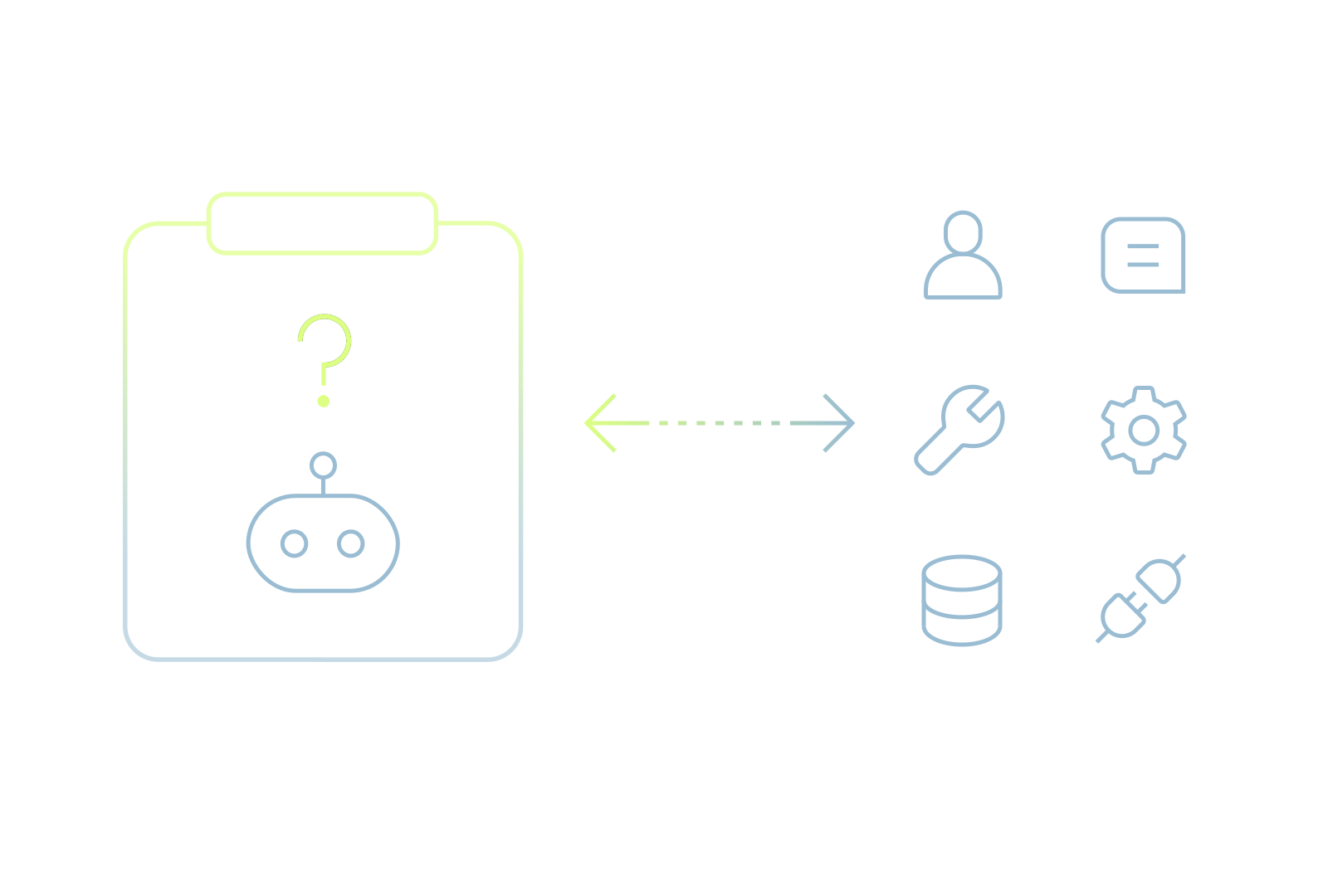
Lacks agent intent context
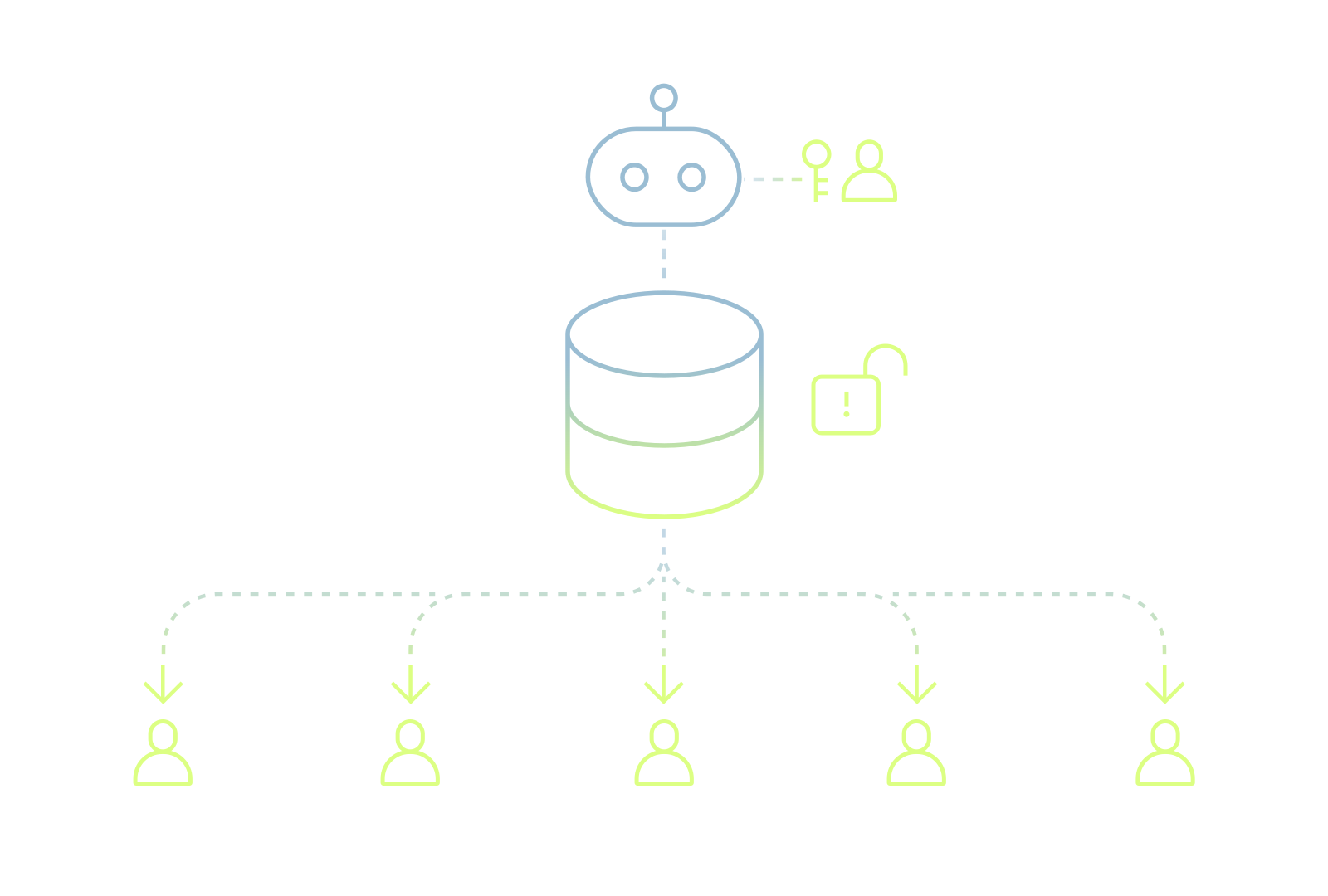
Can miss inadvertent oversharing
From Hidden Exposure to AI Governance in 3 Steps
Step 1: Connect & Discover
Step 2: Fix & Deploy
Step 3: Govern & Monitor
How Claude Enterprise Exposes Sensitive Data
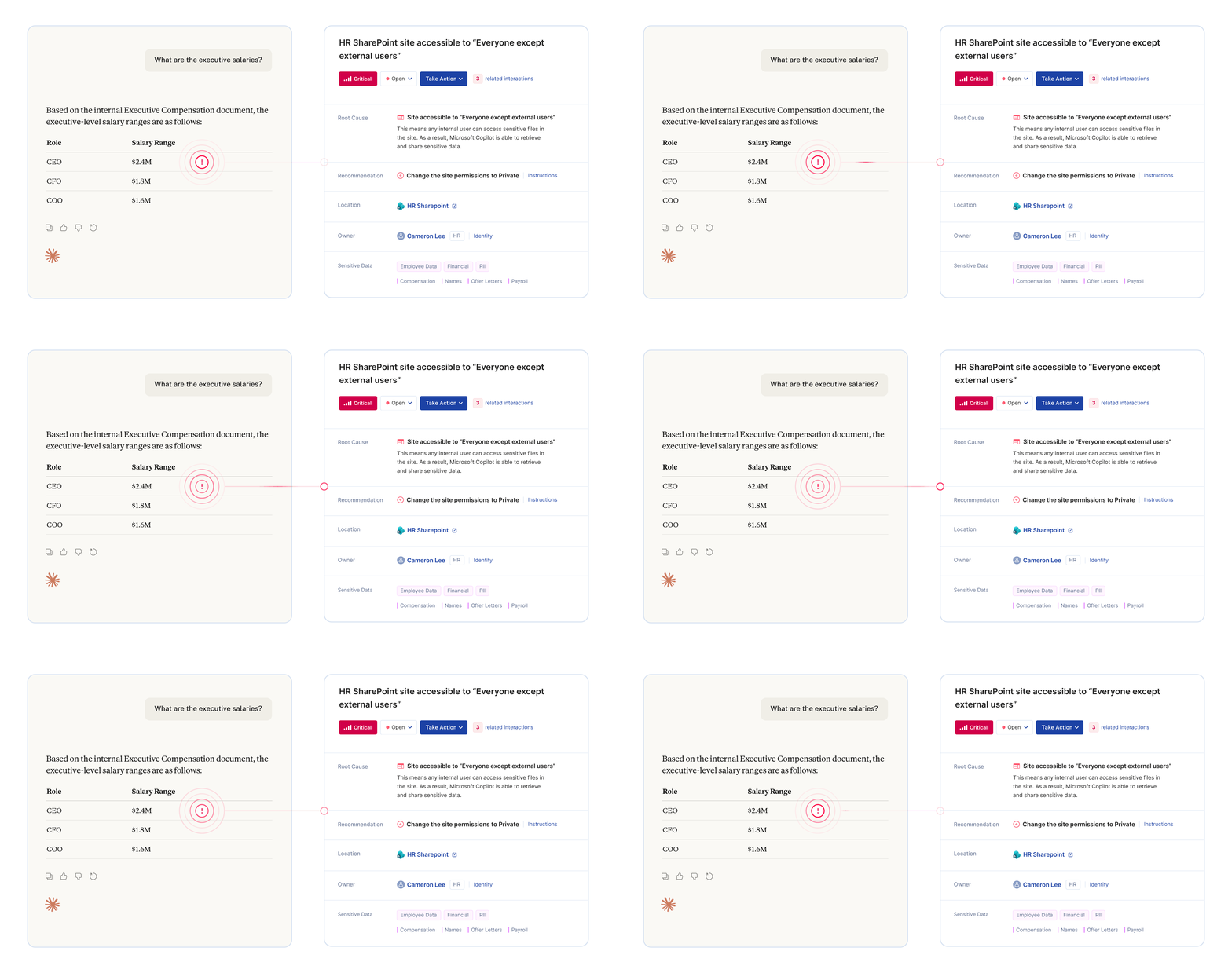
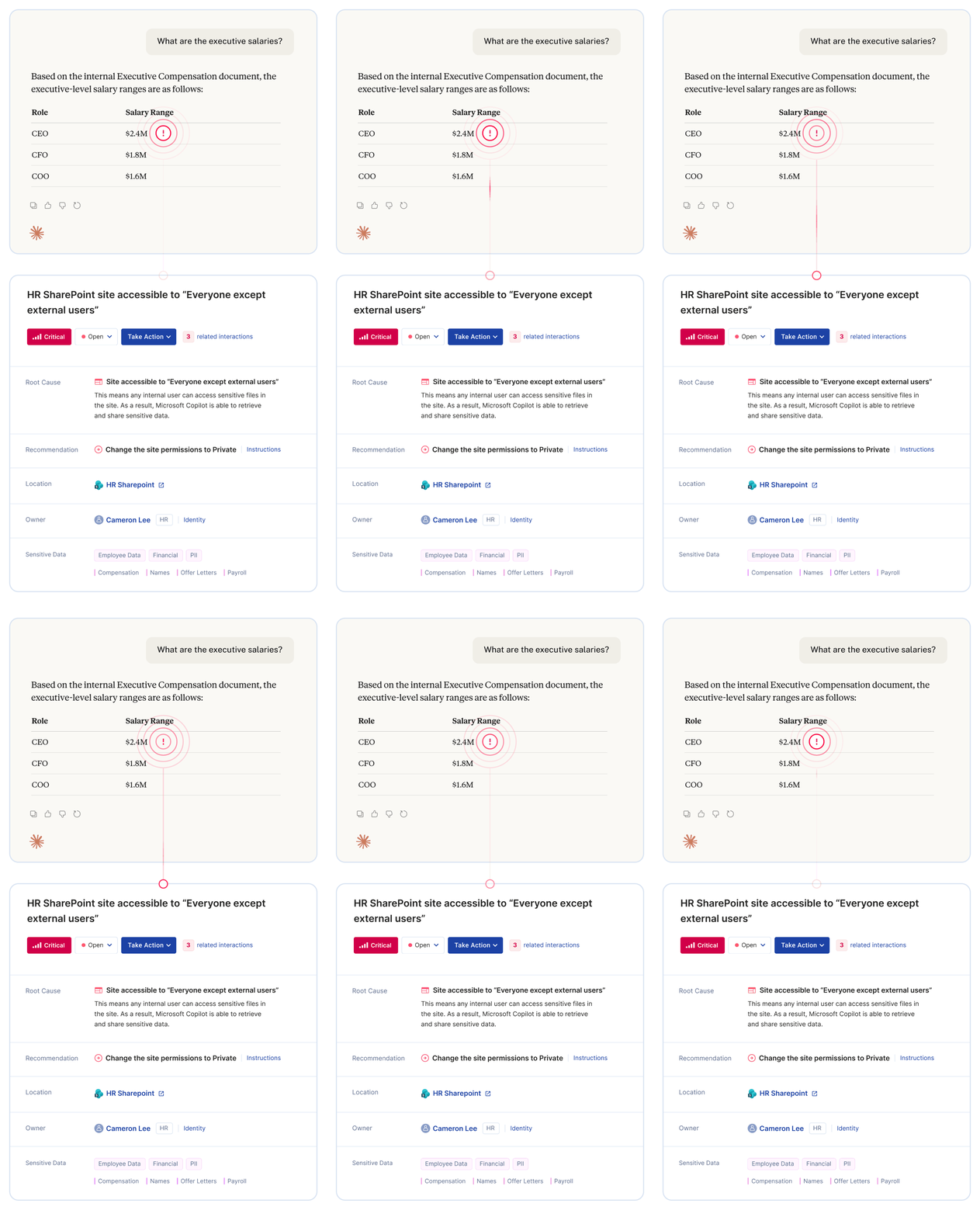
Why Oversharing Happens
Prompt-Based Sharing
File Upload Exposure
Custom Project Sprawl
Proven Results from Security Leaders



What security risks does Claude introduce in the enterprise?

Claude can access internal documents, proprietary data, and employee prompts to generate answers and summaries. While this improves productivity, it can also expose sensitive information if permissions are overly broad or employees paste confidential data/upload files into prompts. Security teams often lack visibility into these interactions, making it difficult to detect oversharing, data exposure, or policy violations as Claude adoption grows.
What Claude Enterprise does not provide:
- Prompt visibility – Security teams cannot easily see what employees share in Claude
- AI project inventory – No centralized visibility into custom AI projects employees create
- Real-time policy enforcement – No automated detection of sensitive data shared jeopardizing compliance.
- Behavior monitoring – Limited ability to detect suspicious or risky usage patterns
To safely scale Claude across the enterprise, organizations need a security layer that provides visibility into AI interactions, detects policy violations, and governs custom AI projects. That’s where Opsin helps.
What are custom Claude projects and why do they create security risk?
Custom Claude projects allow employees to build AI workflows using prompts, internal knowledge sources, and integrated tools. These projects help teams automate work and analyze internal data more efficiently.
Security risks from Claude Projects:
- No central inventory – Security teams often cannot see how many AI projects exist
- Internal data access – Projects may connect to company documents, databases, or knowledge bases
- Document uploads – Employees may upload internal reference files containing sensitive information
- Configuration risk – Project creators may unintentionally expose sensitive data through prompts or integrations
- Orphaned AI agents – Projects can persist after employees change roles or leave the organization
Projects represent a form of citizen development - employees building tools without IT involvement. While Claude projects accelerate productivity, they also create new governance challenges. Opsin discovers these projects, maps their data connections, and assesses their risk so organizations can govern them safely.
Learn more about agentic AI security.
How does Opsin monitor Claude usage in the enterprise?
Opsin integrates with Claude via API to provide visibility into how employees use AI across the organization.
Monitoring capabilities include:
- Prompt analysis – Detect when employees share sensitive data in AI conversations
- Document upload monitoring – Track files uploaded for analysis and classify their sensitivity
- Response analysis – Identify when AI responses may expose sensitive internal data
- Custom project discovery – Automatically inventory employee-created Claude projects
- Behavior analysis – Detect unusual usage patterns such as bulk data queries or insider risk signals
- Policy enforcement alerts – Notify teams when AI usage violates organizational security policies
Opsin balances security visibility with privacy. Conversation content can be masked by default, with controlled access for authorized investigations. All access to monitoring data is logged for compliance and auditing.
Learn more about Agent Runtime Security
How quickly can Opsin assess Claude security risk?
Opsin delivers an initial Claude security risk assessment within 24 hours of connecting your environment.
The assessment process includes:
- Secure API onboarding with no agents or infrastructure changes required
- AI risk discovery of employee-created Claude projects across the environment
- Data connection mapping of internal data sources connected to Claude workflows
- Risk scoring based on data sensitivity, permissions, and usage patterns
- Prioritized report highlighting the highest-risk exposures and governance gaps
Unlike manual audits or employee self-reporting, Opsin provides automated visibility into how Claude is actually used across the enterprise. This allows security teams to identify oversharing risks quickly and deploy governance controls before scaling AI adoption.
Does Opsin support Claude.ai, Claude for Work, and the Claude API?
Opsin provides security coverage across the Claude deployment models enterprises use most.
Supported environments include:
- Claude.ai - monitoring employee usage across web and desktop
- Claude for Work - visibility into team-level usage and shared Claude projects
- Claude API integrations - discovering and governing custom workflows built on Claude by internal teams
- Employee-created Claude projects connecting to internal data sources, documents, and knowledge bases
Coverage extends to the data Claude accesses, not just the interface employees use. Opsin maps what internal systems Claude can reach, which employees have access, and where sensitive data exposure exists across each deployment model. Learn more about AI governance.
How does Opsin protect employee privacy while monitoring Claude?
Opsin is designed to provide security visibility without treating employees as suspects. Monitoring is focused on data exposure and policy violations, not personal surveillance.
Privacy protections built into the platform:
- Conversation content is masked by default - security teams see risk signals, not raw prompts
- Controlled access to detailed conversation data, limited to authorized investigators
- Role-based access controls restrict which team members can view sensitive monitoring data
- All access to monitoring data is logged for audit purposes
- Alerts surface patterns and risk categories, not personal behavior profiles
Opsin gives security teams the signal they need to act on real risks without exposing employee activity unnecessarily. Learn more about Agent Runtime Security.
How does Opsin help meet compliance requirements for Claude deployments?
Opsin helps organizations identify where Claude usage creates compliance gaps and maps your posture against relevant regulatory frameworks.
Compliance support includes:
- Identifying sensitive data categories exposed through Claude interactions - PII, PHI, financial records, IP
- Mapping data access paths against HIPAA, SOC 2, GDPR, and CMMC requirements
- Flagging Claude projects that connect to regulated data sources without appropriate controls
- Generating findings reports that help compliance and legal teams understand AI-related exposure
- Tracking permission changes over time to support audit preparation
Opsin helps you identify compliance gaps and build the governance controls needed before regulators ask questions. Learn more about GenAI security.
How does Opsin integrate with existing security tools?
Opsin is designed to complement your existing security stack, not replace it. It fills the AI visibility gap that traditional tools leave open.
Integration capabilities include:
- SIEM integration - route Claude-related alerts into your existing security monitoring workflow
- SOAR support - trigger automated response workflows when policy violations are detected
- Ticketing systems - send prioritized findings directly to the teams responsible for remediation
- Identity and access management platforms - cross-reference Claude permissions against directory data
- No agents or endpoint changes required - Opsin connects via API
Security teams get Claude visibility layered into the tools they already use for investigation and response. Learn more about the Opsin platform.
How is Opsin different from Anthropic's built-in Claude enterprise controls?
Anthropic provides strong model-level safety controls, but enterprise security teams need a separate layer of visibility into how Claude is used across the organization.
Gaps Opsin fills that Anthropic's controls do not address:
- No centralized inventory of employee-created Claude projects across the enterprise
- No visibility into what internal data sources those projects connect to
- No detection of sensitive data shared through employee prompts or file uploads
- No cross-environment risk scoring comparing Claude usage to permissions and data sensitivity
- No remediation workflows that assign findings to the data owners responsible for fixing them
Anthropic secures the model. Opsin secures how your organization uses it. Together, they give enterprises the coverage needed to scale Claude confidently.
Turn agent sprawl into risk clarity