

AI Platform
ChatGPT Enterprise Security





















ChatGPT Enterprise Creates New Data Exfiltration Paths

Sensitive Data in Prompts
Custom GPTs Outside Security Review
No Visibility Into AI Usage
Data Exfiltration Risk
Compliance Gaps Widen
Lacks the full picture
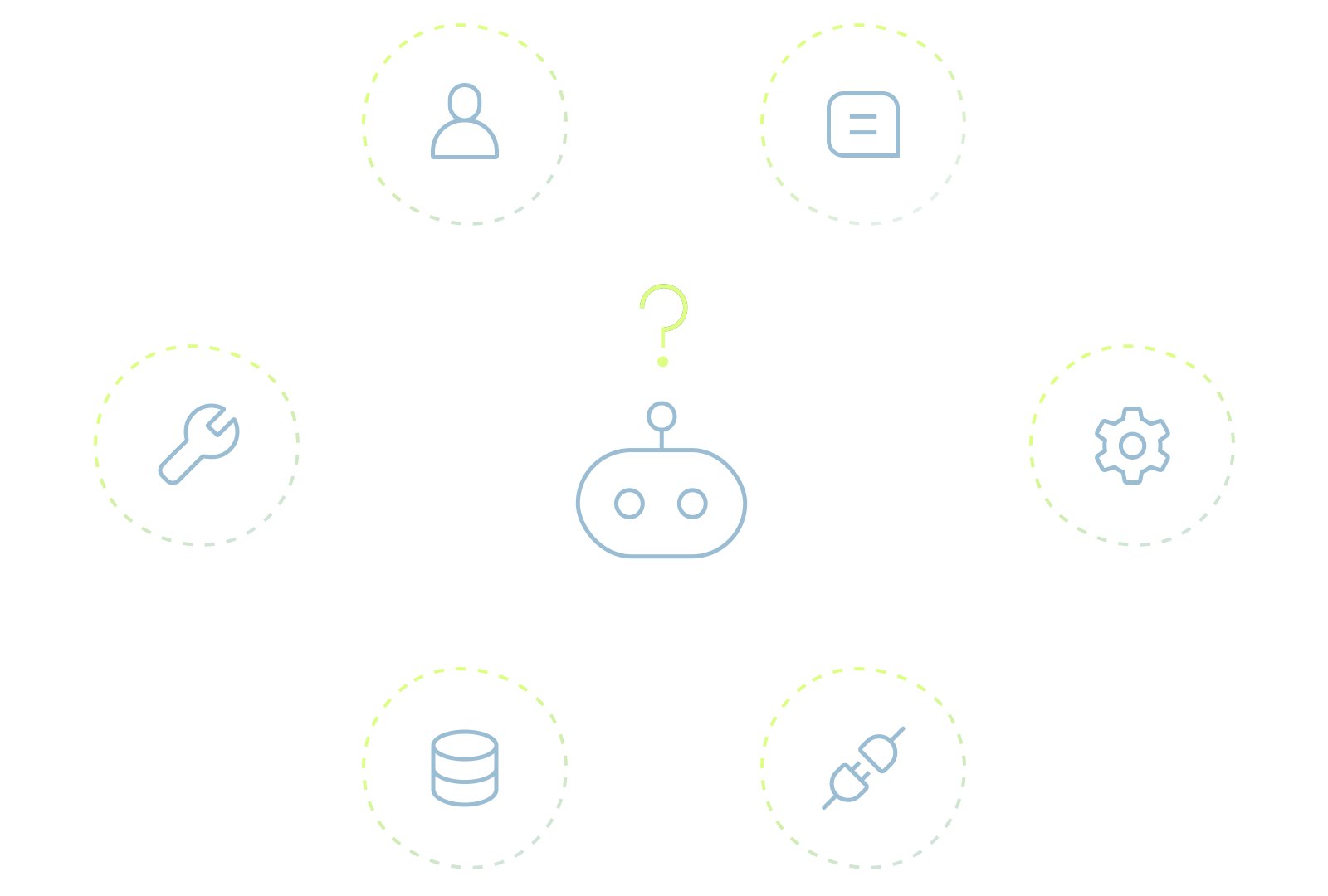
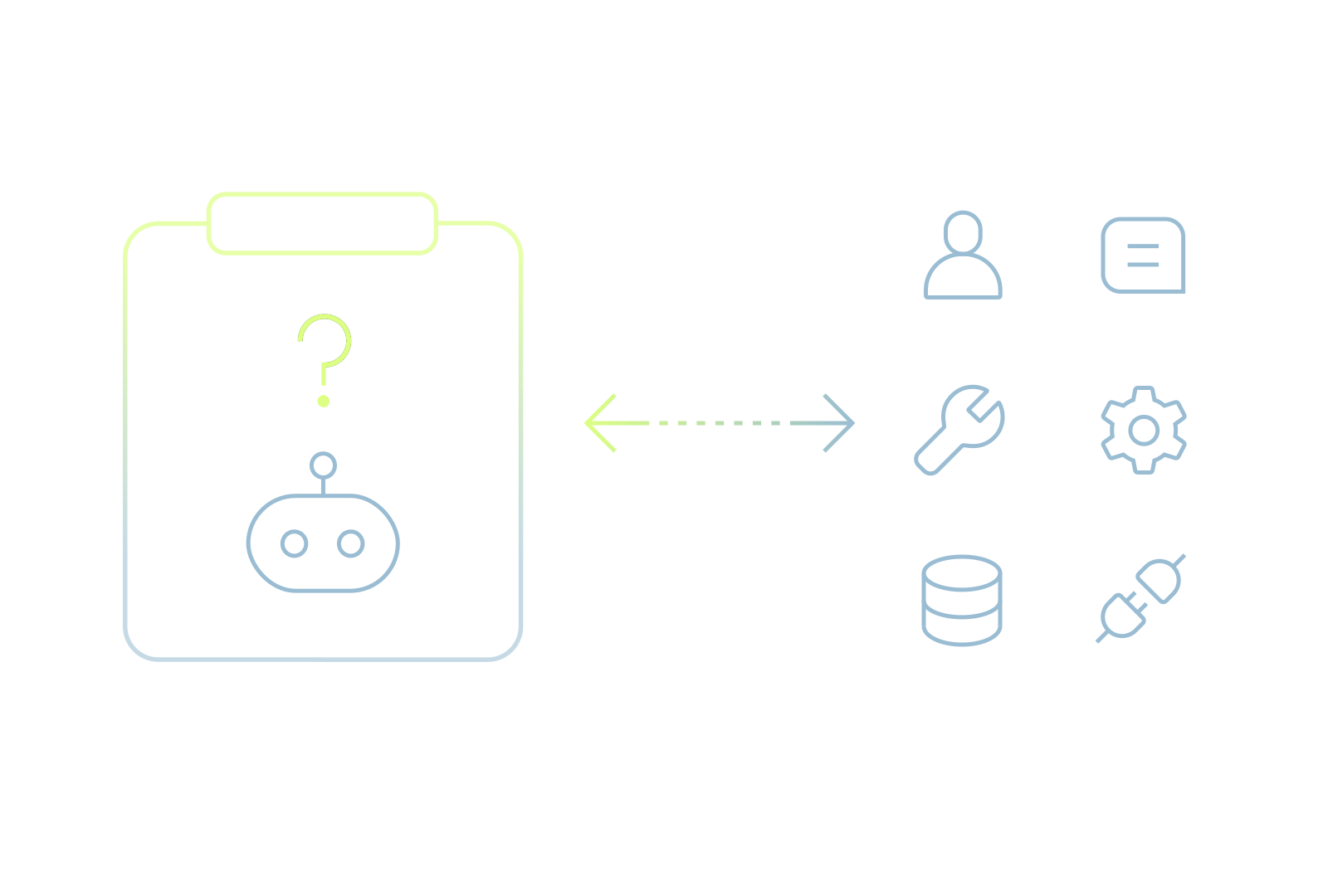
Lacks agent intent context
Can miss inadvertent oversharing
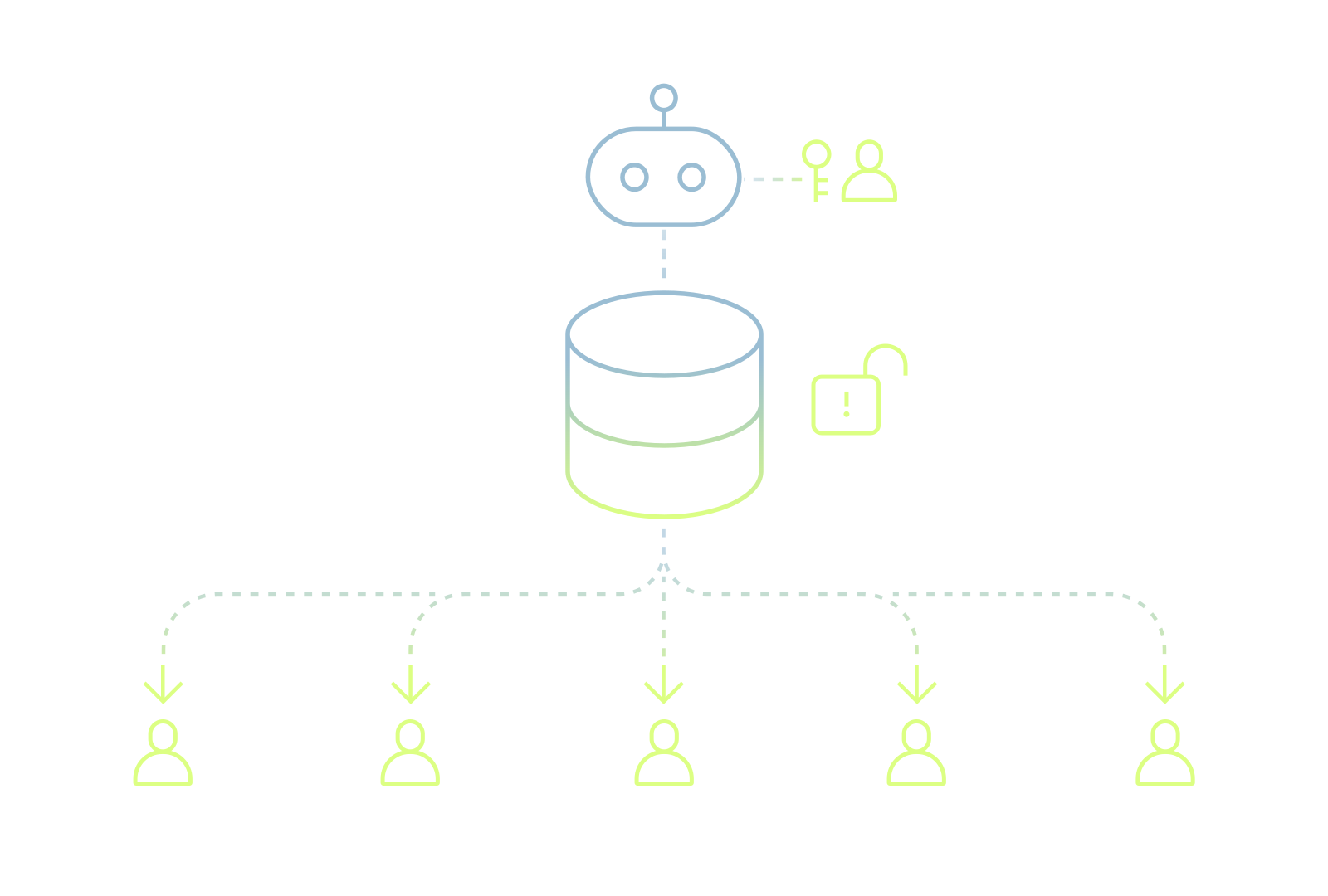
From Blind Spot to Full Visibility in 3 Steps
Step 1: Connect & Discover
Step 2: Monitor & Detect
Step 3: Govern & Respond
How ChatGPT Enterprise Exposes Sensitive Data
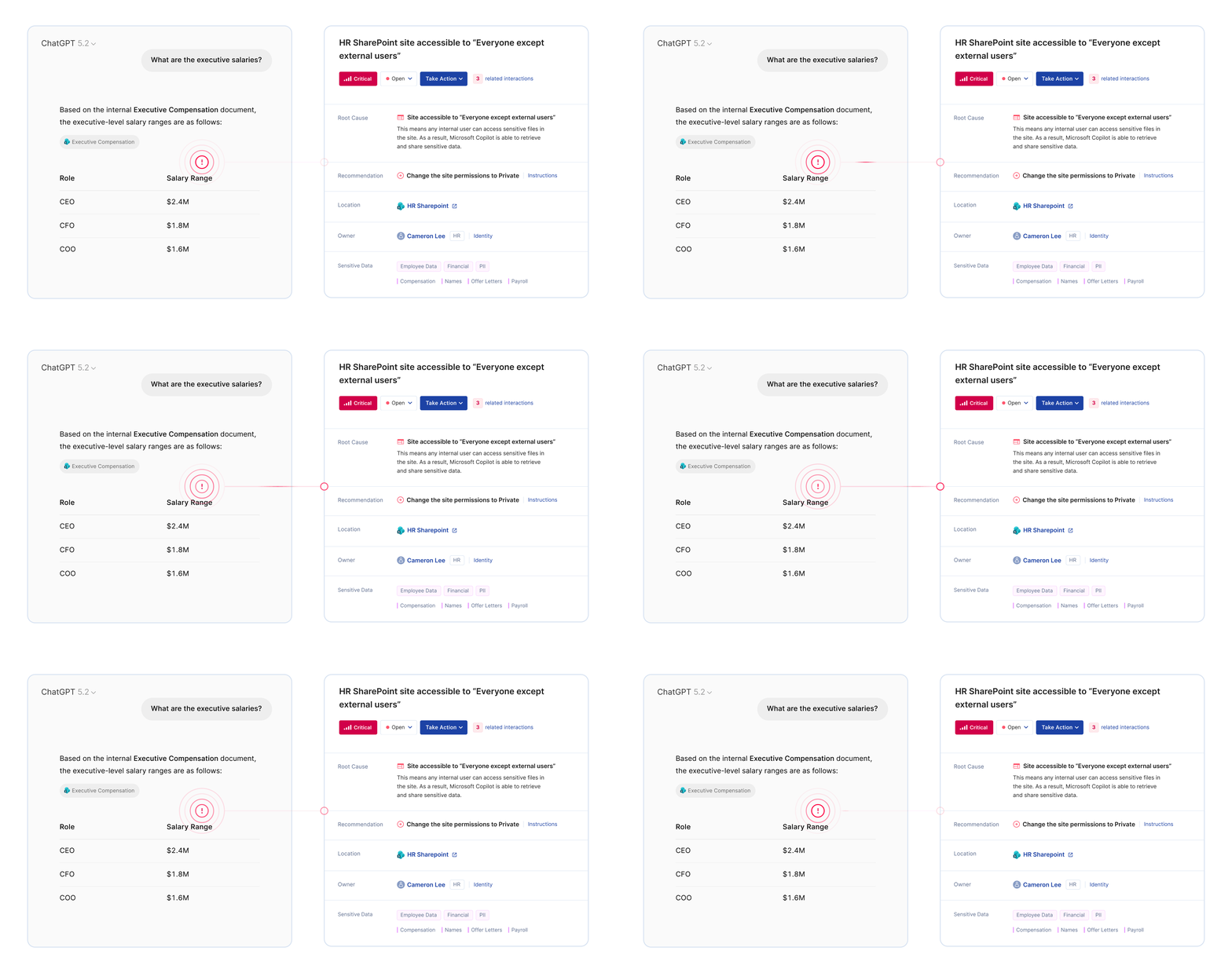
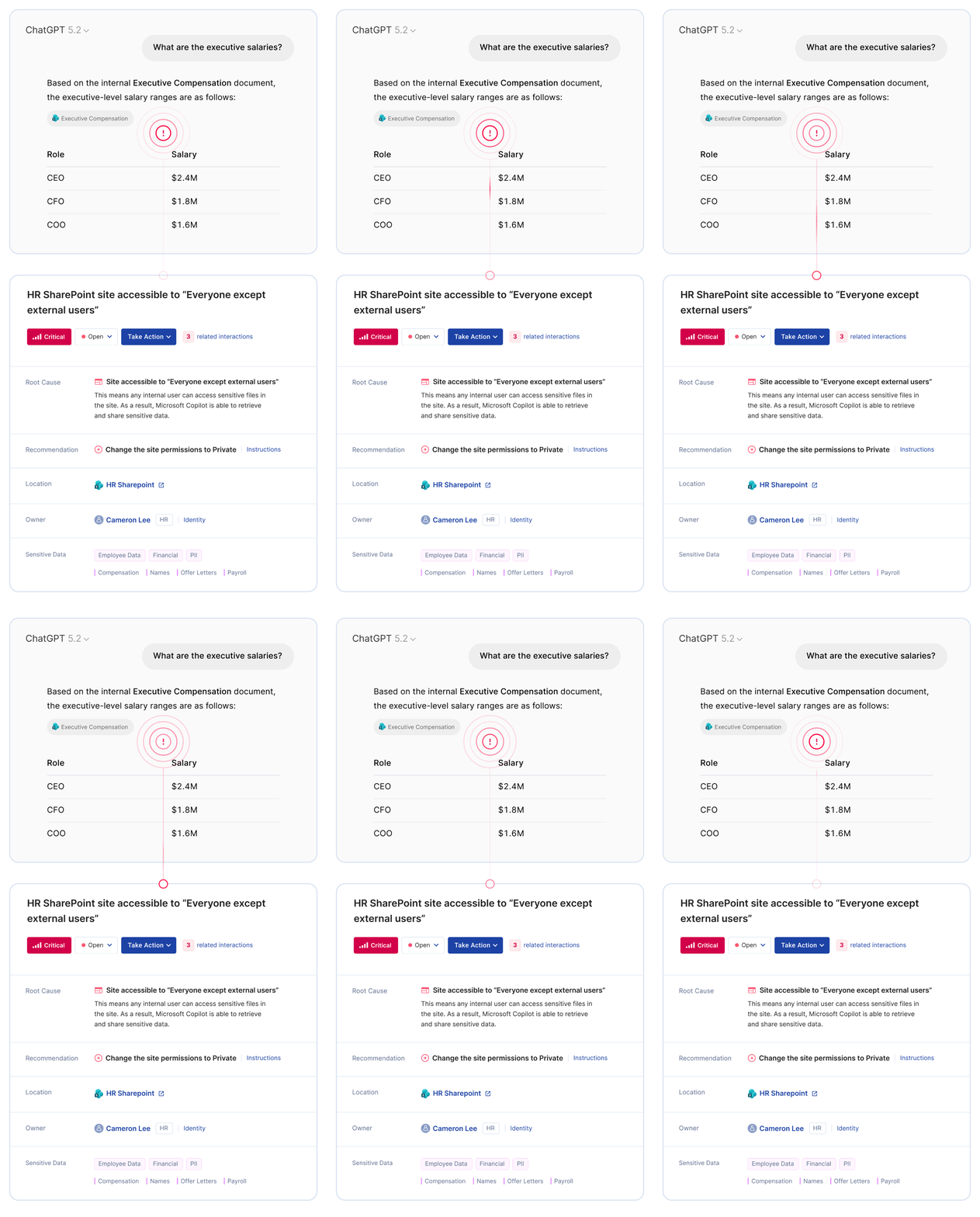
Why Oversharing Happens
Prompt-Based Sharing
File Upload Risks
Custom GPT Sprawl
Proven Results from Security Leaders



What are the security risks of ChatGPT Enterprise?

ChatGPT Enterprise introduces data security risks that traditional tools weren't designed to address. While OpenAI doesn't train on your enterprise data, the risk lies in what employees share through the platform.
Primary security risks:
- Data exfiltration through prompts - Employees paste confidential information including source code, customer data, financial models, and strategic documents into conversations
- Sensitive file uploads - Documents shared for AI analysis leave your controlled environment
- Custom GPT sprawl - Employees build custom GPTs connecting to internal data without security review or inventory
- Insider threat acceleration - Malicious or departing employees can rapidly extract information through AI conversations
- Policy violations - Employees may share regulated data like PHI, PII, or trade secrets without recognizing the implications
The challenge isn't ChatGPT itself - it's the lack of visibility into how employees actually use it. Without monitoring, you can't enforce policies or detect risky behavior.
Learn more about ChatGPT security issues.
Is ChatGPT Enterprise safe for corporate use?
ChatGPT Enterprise includes security features that make it safer than consumer ChatGPT, but safe deployment requires additional governance controls.
What ChatGPT Enterprise provides:
- Data isolation - Your conversations aren't used to train OpenAI models
- Encryption - Data encrypted in transit and at rest
- SSO integration - Enterprise identity management support
- Admin controls - Basic usage management and workspace settings
- SOC 2 compliance - OpenAI maintains SOC 2 Type 2 certification
What ChatGPT Enterprise doesn't provide:
- Prompt monitoring - No visibility into what employees actually share
- Custom GPT governance - No inventory or risk assessment of employee-built agents
- Policy enforcement - No real-time detection of sensitive data in conversations
- Behavioral analysis - No insider threat detection or anomaly alerting
Organizations need a security layer on top of ChatGPT Enterprise to gain visibility into usage, enforce policies, and detect data exposure. That's the gap Opsin fills.
Learn more about ChatGPT security.
What is a custom GPT and why does it create security risk?
A custom GPT is an AI agent built within ChatGPT Enterprise that can be configured with specific instructions, knowledge files, and external tool connections. Employees create them to automate workflows and enhance productivity.
Security risks from custom GPTs:
- No central inventory - Security teams often don't know how many custom GPTs exist or who created them
- Data connections - Custom GPTs can connect to internal systems, databases, and file repositories
- Knowledge file exposure - Uploaded reference documents may contain sensitive information
- Permission gaps - GPT creators may not understand the security implications of their configurations
- Orphaned agents - Custom GPTs persist even after employees leave, creating ungoverned access paths
Custom GPTs represent a form of citizen development - employees building AI tools without IT involvement. This accelerates innovation but creates security blind spots. Opsin discovers all custom GPTs, maps their data connections, and assesses their risk so you can govern them effectively.
Learn more about agentic AI security.
How does Opsin monitor ChatGPT Enterprise usage?
Opsin integrates with ChatGPT Enterprise via API to provide real-time visibility into how employees use AI across your organization.
Monitoring capabilities:
- Prompt analysis - See what employees share with ChatGPT and detect sensitive data in conversations
- File upload tracking - Know when documents are uploaded and classify their sensitivity
- Response monitoring - Detect when ChatGPT returns information that may indicate data exposure
- Custom GPT discovery - Automatically inventory all custom GPTs with their configurations and data connections
- Behavioral patterns - Identify unusual activity like bulk data queries or departing employee behavior
- Policy violation alerts - Get notified immediately when usage violates your AI governance policies
Opsin balances security oversight with employee privacy. Conversation content can be masked by default, with controlled reveal only for authorized investigators. All monitoring access is logged for audit purposes.
Learn more about Agent Runtime Security.
How quickly can Opsin assess my ChatGPT Enterprise security?
Opsin delivers your ChatGPT Enterprise security assessment within 24 hours of connecting your environment.
The assessment process:
- One-click onboarding connects securely via API with no agents required
- Custom GPT discovery automatically inventories all employee-built agents
- Data connection mapping identifies what internal systems and files custom GPTs can access
- Risk scoring evaluates each custom GPT based on data sensitivity and permission scope
- Prioritized report delivered within 24 hours showing highest-risk agents and usage patterns
Unlike manual audits that rely on employee self-reporting, Opsin provides complete visibility into your ChatGPT Enterprise footprint automatically.
Learn more about AI Readiness Assessment.
Can Opsin detect sensitive data in ChatGPT prompts?
Yes. Opsin analyzes ChatGPT conversations to detect when employees share sensitive information through prompts or file uploads.
Detection capabilities:
- PII detection - Social security numbers, addresses, phone numbers, email addresses
- Financial data - Account numbers, revenue figures, pricing models, M&A information
- Healthcare information - Patient records, clinical notes, insurance details (PHI)
- Source code - Proprietary algorithms, API keys, credentials, intellectual property
- Customer data - Contract terms, account details, sales information
- Strategic documents - Board presentations, acquisition plans, competitive intelligence
Each detection includes classification by sensitivity level, regulatory impact, and recommended response. High-risk exposures generate immediate alerts so your team can respond before data spreads further.
Learn more about AI oversharing.
How does Opsin help with ChatGPT compliance requirements?
Opsin helps organizations maintain regulatory compliance by monitoring what data employees share with ChatGPT and enforcing usage policies.
Compliance frameworks supported:
- HIPAA - Detect and prevent PHI exposure through ChatGPT conversations
- SOC 2 - Demonstrate AI governance controls and usage monitoring
- GDPR - Ensure personal data isn't inappropriately shared with AI tools
- PCI DSS - Prevent payment card data from entering AI conversations
- Financial services regulations - Monitor for PII and financial data exposure
- Intellectual property protection - Detect source code and trade secret sharing
Opsin provides the audit trail that compliance frameworks require. When regulators ask how you control sensitive data in AI tools, you show them active monitoring, policy enforcement, and documented incident response.
Can Opsin govern custom GPTs built by employees?
Yes. Opsin provides complete governance capabilities for custom GPTs across your ChatGPT Enterprise deployment.
Custom GPT governance includes:
- Automatic discovery - Find all custom GPTs without relying on employee self-reporting
- Ownership tracking - Know who created each GPT and who maintains it
- Data connection mapping - See what internal systems and files each GPT can access
- Risk assessment - Score each GPT based on data sensitivity, permissions, and configuration
- Configuration review - Analyze instructions, knowledge files, and tool integrations
- Remediation routing - Send specific fix guidance to GPT owners when issues are found
Security teams can't govern what they can't see. Opsin eliminates the custom GPT blind spot so you can enable employee innovation while maintaining security oversight.
Learn more about AI agent governance.
Can Opsin track ChatGPT usage patterns for insider risk detection?
Yes. Opsin correlates all ChatGPT activity by user identity, enabling detection of suspicious behavior patterns that may indicate insider risk.
Insider risk capabilities:
- Activity history - See every ChatGPT interaction for specific users across sessions
- Anomaly detection - Flag unusual query volume, off-hours usage, or sensitive topic focus
- Departing employee monitoring - Identify potential data exfiltration before offboarding
- Bulk extraction signals - Detect patterns suggesting systematic data gathering
- Cross-platform correlation - Connect ChatGPT behavior with activity in other AI tools
- Investigation support - Provide full context for HR and legal investigations
When someone uses ChatGPT to query customer lists, export financial data, and summarize competitive intelligence in one session, you want to know. Opsin surfaces these patterns automatically.
Learn more about GenAI security.
How is Opsin different from traditional DLP for ChatGPT security?
Traditional DLP tools monitor network traffic and file transfers. They weren't designed for prompt-based data sharing in AI applications.
Key differences:
- Prompt understanding - Opsin analyzes natural language conversations, not just file movements
- Context awareness - Distinguishes between appropriate AI use and policy violations
- Custom GPT visibility - Discovers and governs employee-built AI agents
- AI-native detection - Identifies sensitive data patterns specific to AI interactions
- Real-time monitoring - Catches exposure as it happens, not after the fact
- Behavioral analysis - Detects insider risk patterns across AI usage
DLP tells you when someone emails a file. Opsin tells you when someone pastes customer data into ChatGPT, uploads a financial model for analysis, or builds a custom GPT that connects to your CRM. Different risk surface, different solution.
Learn more about Opsin's platform.
Can Opsin integrate with our existing security tools?
Yes. Opsin integrates with enterprise security infrastructure to embed ChatGPT governance into existing workflows.
Integration capabilities:
- SIEM integration - Feed ChatGPT security events into Splunk, Microsoft Sentinel, or other platforms
- ITSM workflows - Auto-create ServiceNow or Jira tickets when incidents require follow-up
- Identity providers - Correlate ChatGPT activity with user identity from Azure AD or Okta
- Compliance platforms - Export audit evidence for GRC tools and compliance reporting
- Insider risk programs - Feed behavioral signals into existing investigation workflows
Opsin doesn't create parallel security processes. It adds AI-specific visibility to the tools and workflows your team already uses.
Learn more about Ongoing Oversharing Protection.
Turn agent sprawl into risk clarity