

Agent Runtime Security
Contain the agent, not the business





















of agent tools require human confirmation before acting
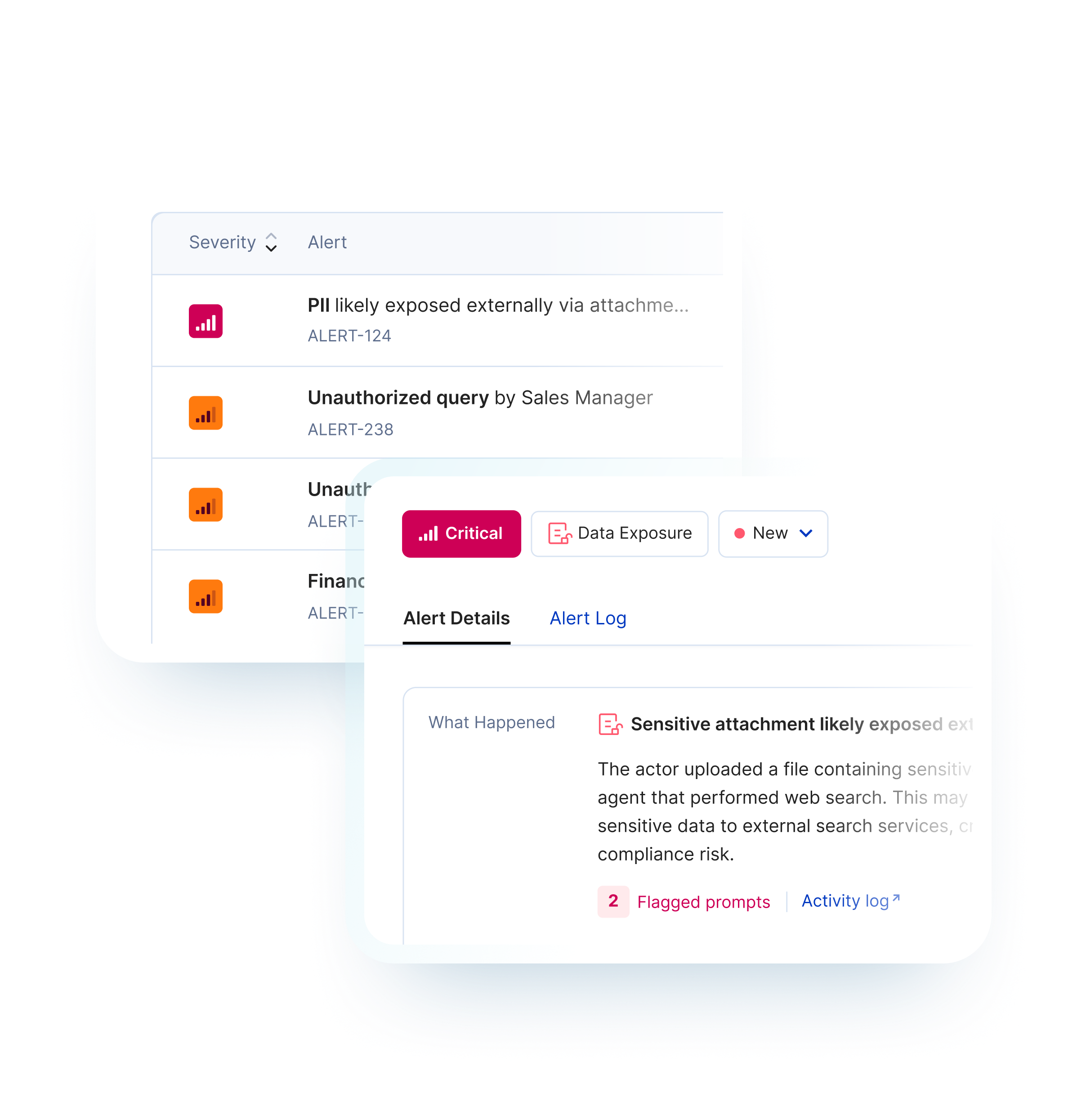
Context driven runtime enforcement
Agentless Visibility
Opsin uses supported platform APIs for continuous AI agent monitoring, including server-side runs and MCP tool calls where available.
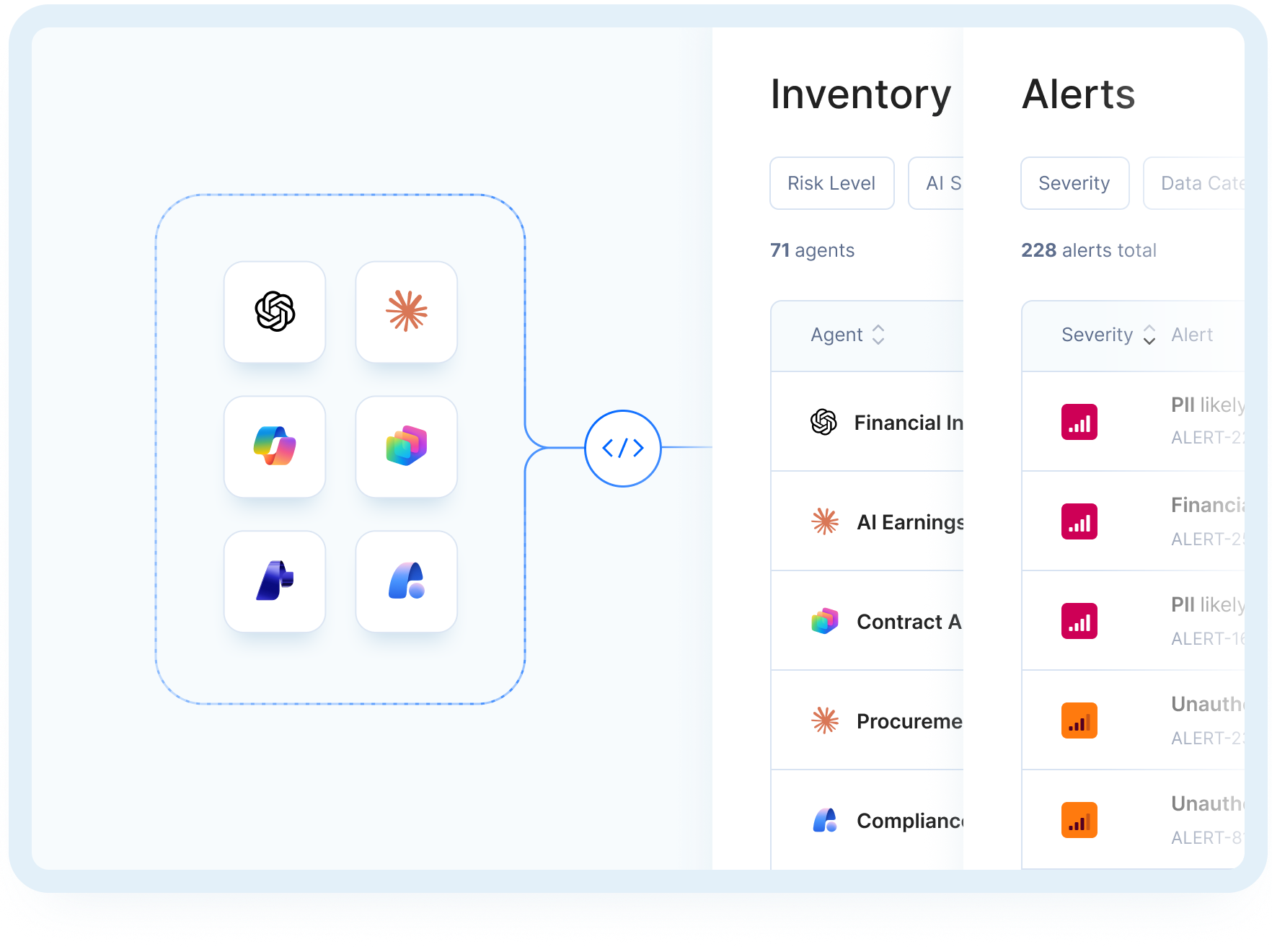
Risk Prioritization
Opsin ranks agents by their access, data, and capabilities, giving your team a focused view of the highest-risk cases.
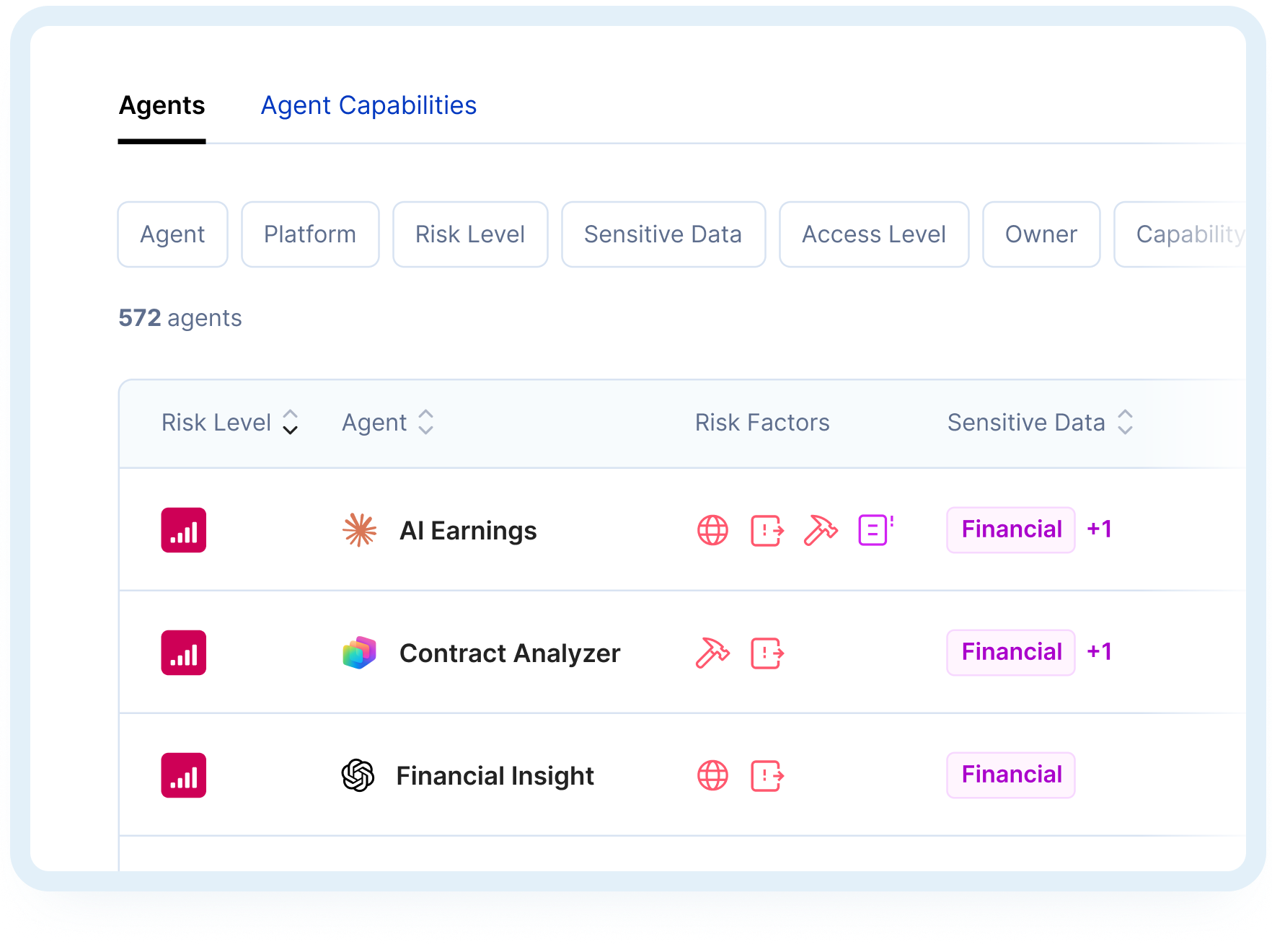
Agent Containment
Opsin lets your team block a risky agent, recheck the issue, and notify its owner.
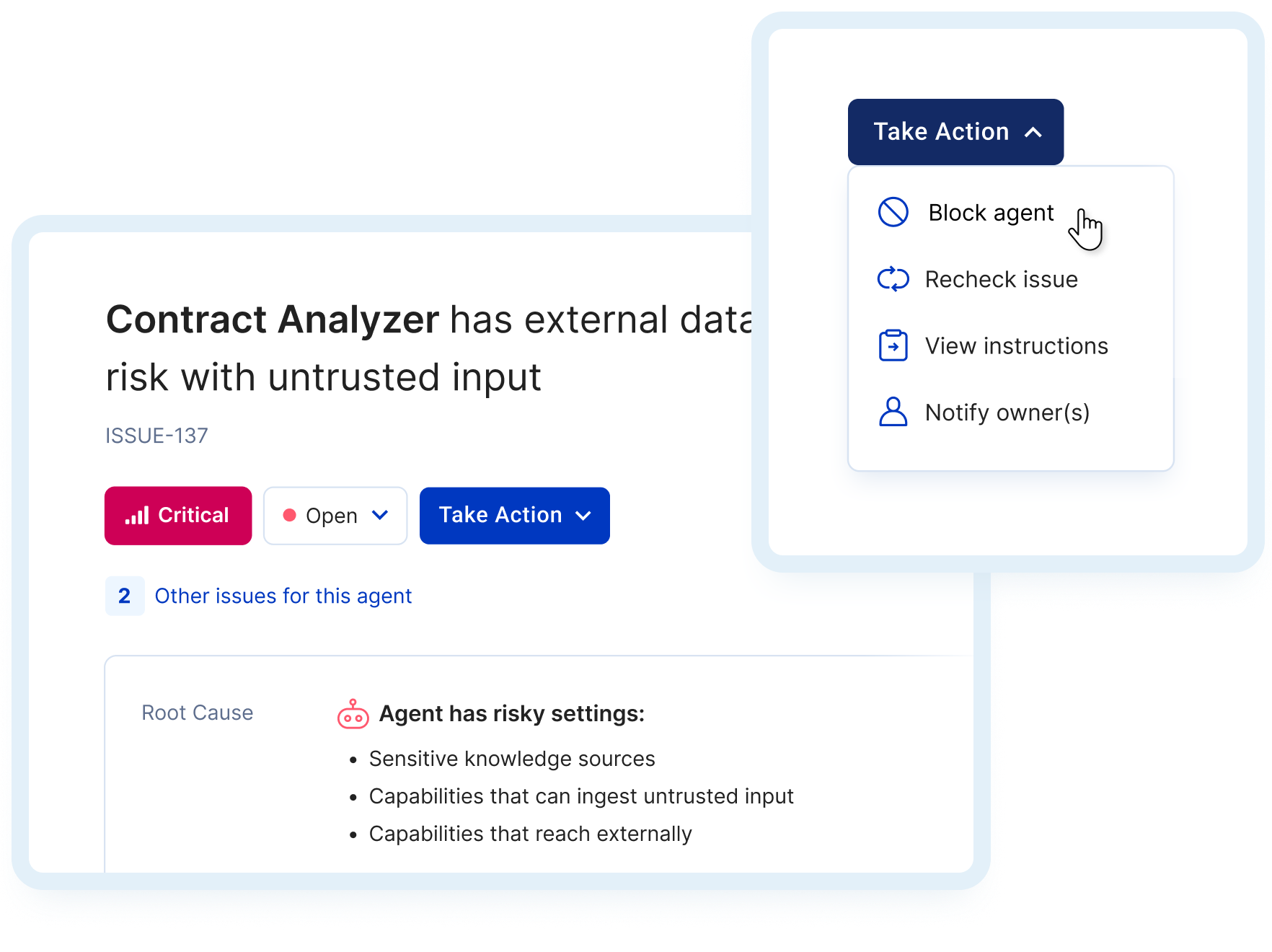
From live agent to contained risk
Gain full Agent Visibility
Keep a continuous risk picture
Decide what you permit
Contain & Fix
Assess agent risk with confidence


Extend protection across the agent lifecycle
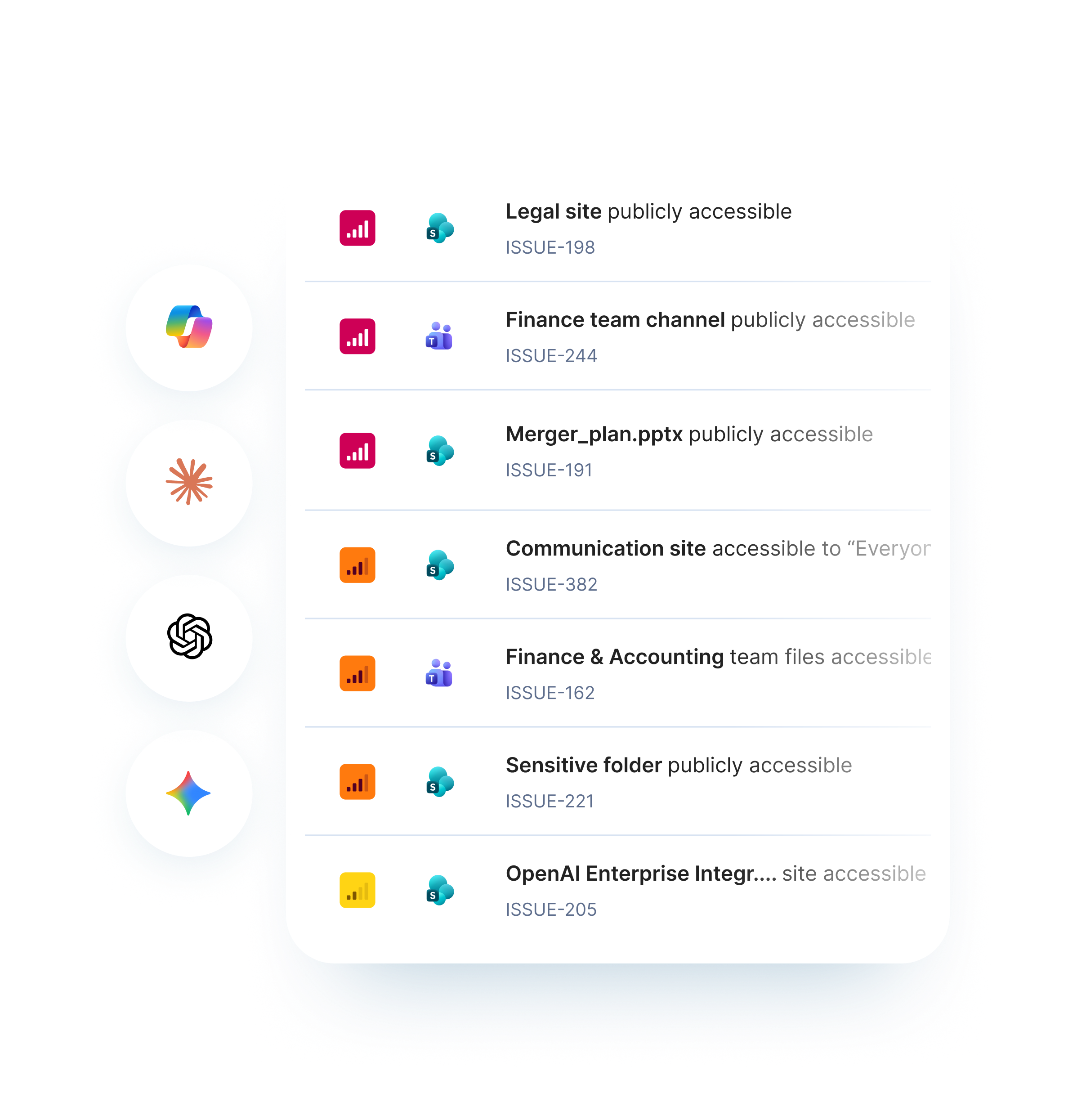
Ongoing Oversharing Protection
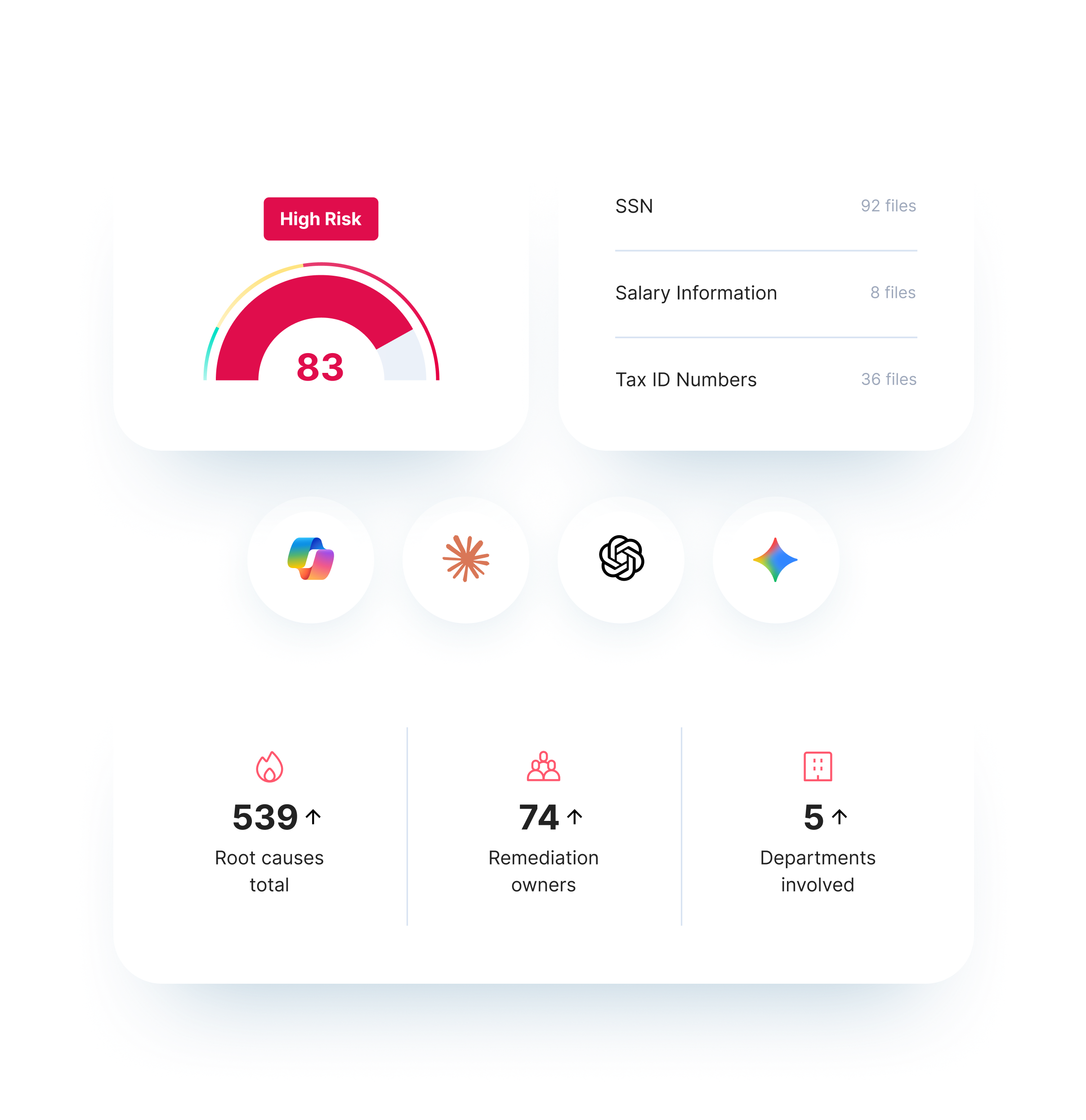
AI Risk Assessment
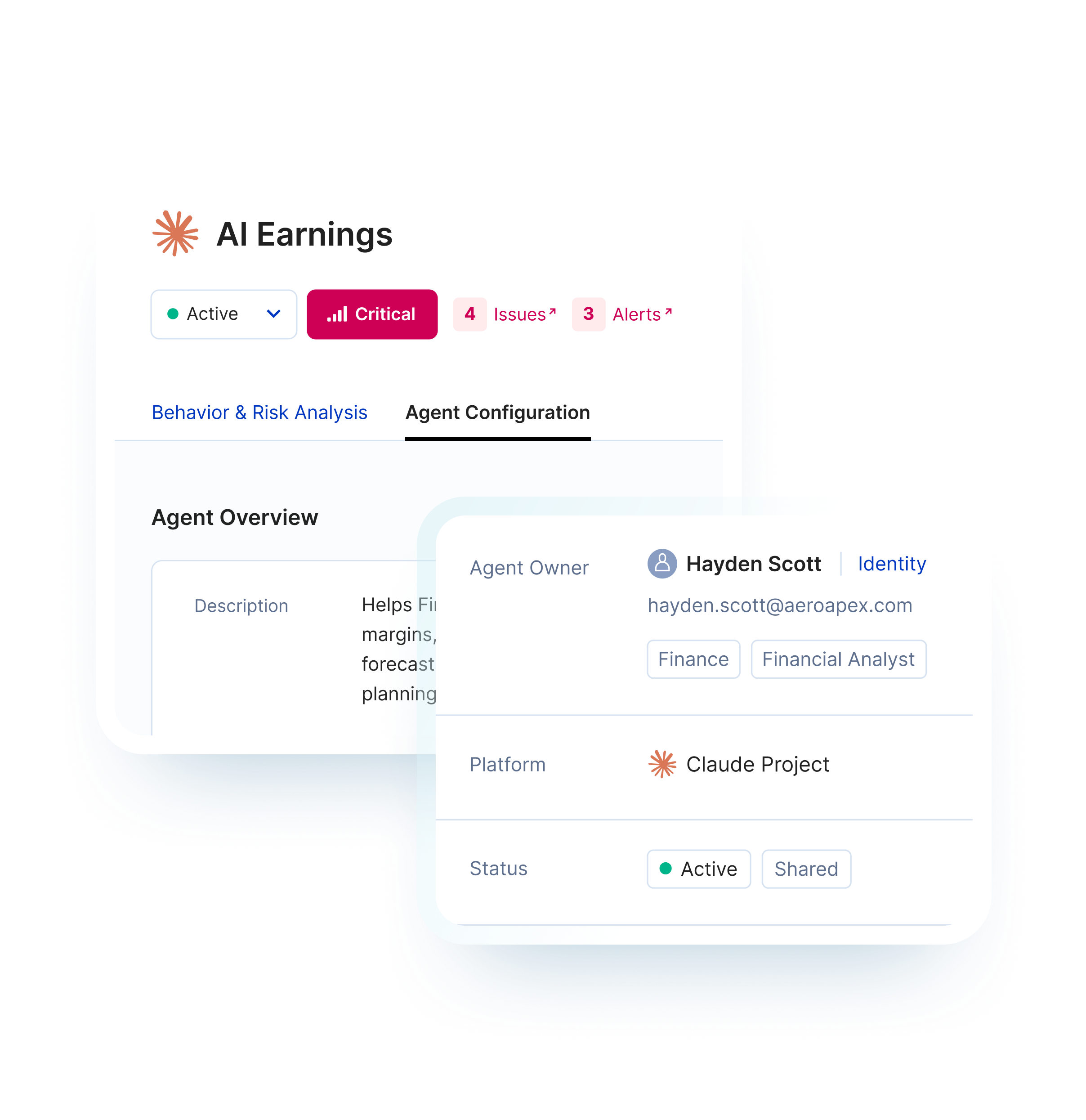
Agent Identity Security
What is AI agent runtime security?

AI agent runtime security is the continuous monitoring of live agent activity against the agent's intended purpose. Opsin models each agent's intent, access, and behavior, then surfaces agents whose actions expose data or drift outside what they were built to do. We cover why this matters in Containing AI agent misbehavior.
How does Opsin detect when an agent misbehaves?
Opsin classifies what each agent was built to do, then compares that intent with its actual activity, data access, and tool use. The gap between the two is the risk, and every rating comes with plain-language reasoning. For a real-world example of goal-driven agents going off course, read When agent goals matter more than rules.
Can Opsin contain a risky agent?
Yes. When an agent crosses the line your policy defines, your team can:
- Quarantine the agent while keeping the rest of the business running
- Remove excessive access at the source
- Route the fix to the agent's owner with step-by-step guidance
Remediation lands with the person who built the agent, not as another ticket on the security team's queue.
Does runtime monitoring disrupt how people work?
No. Opsin connects by API with nothing to install, and enforcement follows the policy your team defines. Legitimate agents keep running while risky ones are contained. That is also why discovery comes first, see Agent Discovery.
How quickly does Opsin deliver visibility?
Within 24 hours of connecting, teams see all agents across sanctioned AI platforms, drafts and live, plus their connections and who built them.
How often do agents act without human approval?
Almost always. Opsin found just 0.5% of agent tools require human confirmation before acting, which is why continuous runtime monitoring matters more than one-time reviews. Start with a free AI Readiness Assessment to see where your environment stands.
What is AI agent monitoring?
AI agent monitoring tracks what live agents do: the data they access, the tools they call and where they send information. Opsin goes one step further and compares that activity to each agent's intended purpose, so you see when an agent drifts from its job, not just that it was active. It covers server-side runs and MCP tool calls, not only chats.
How is Opsin different from a DLP or CASB for AI agents?
Those tools see events. Opsin sees intent. It models what each agent was built to do, compares that to live activity and access, and flags the gap rather than every event. The fix then goes to the person who built the agent. See how the model works on Why Opsin.
Turn agent sprawl into risk clarity