
AI Agent Discovery
Find the agents that matter




















agents built by the workforce go unused after creation and remain undeleted
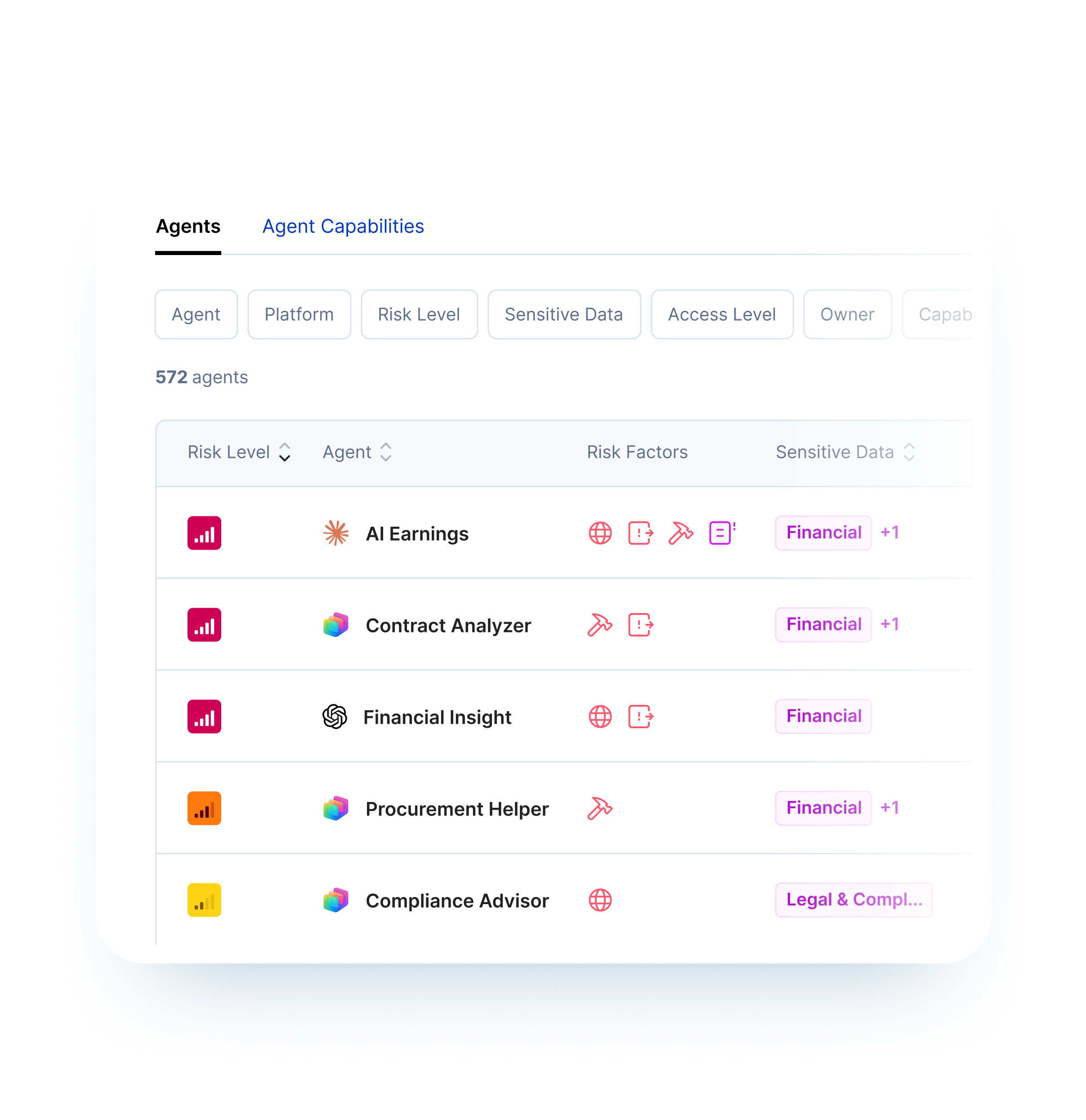
An evidence-backed AI agent inventory
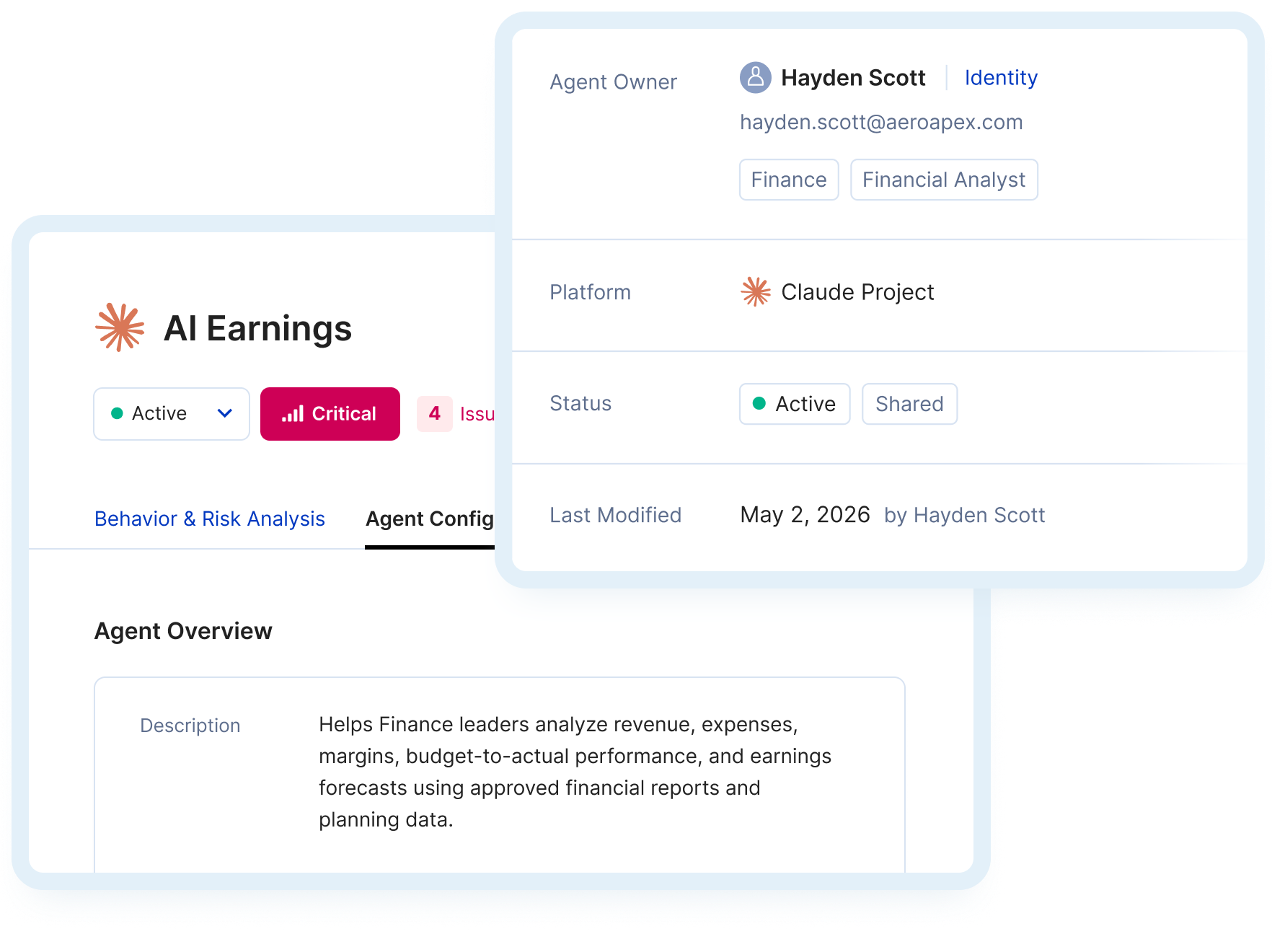
Find Responsible Owners
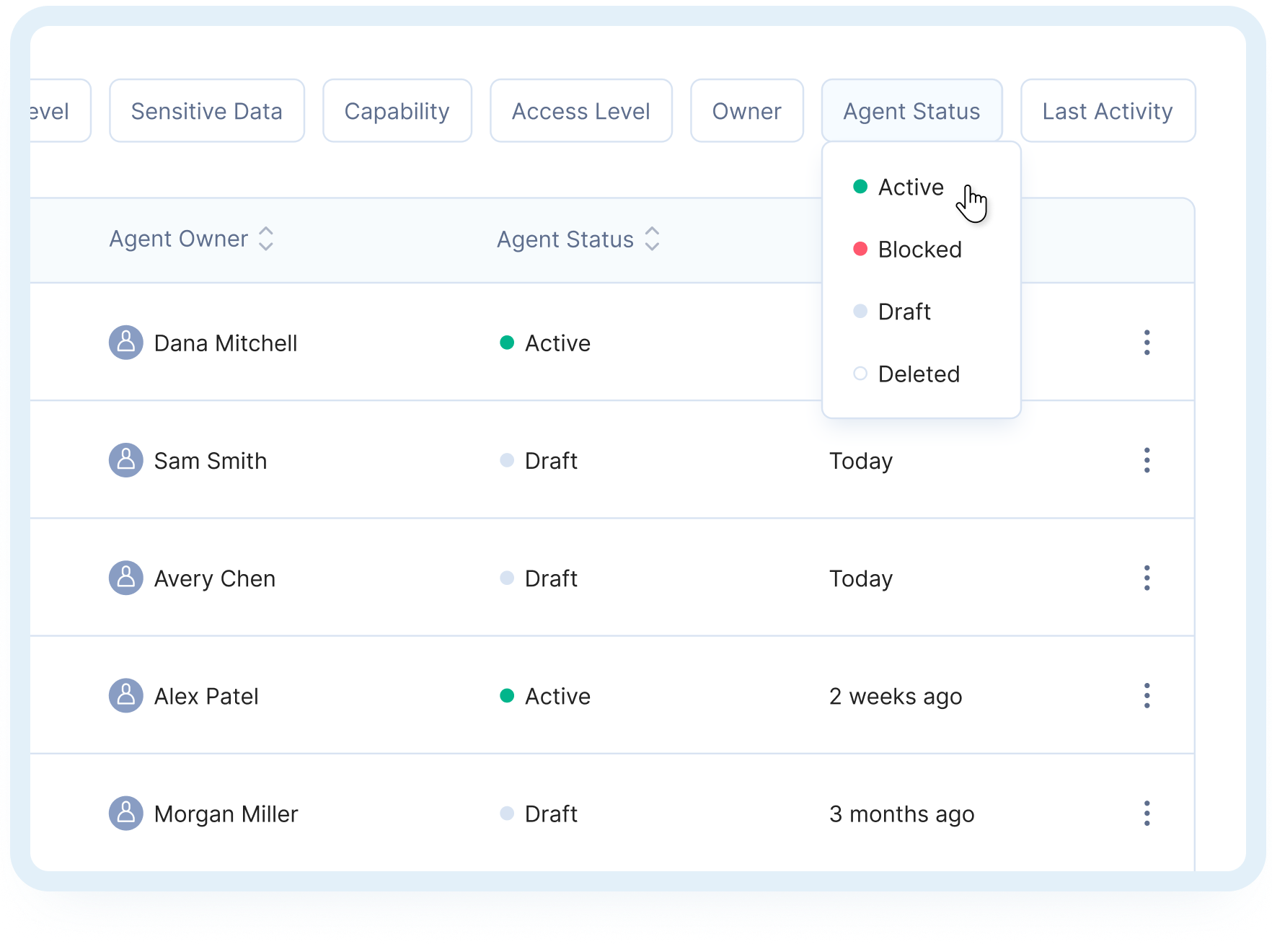
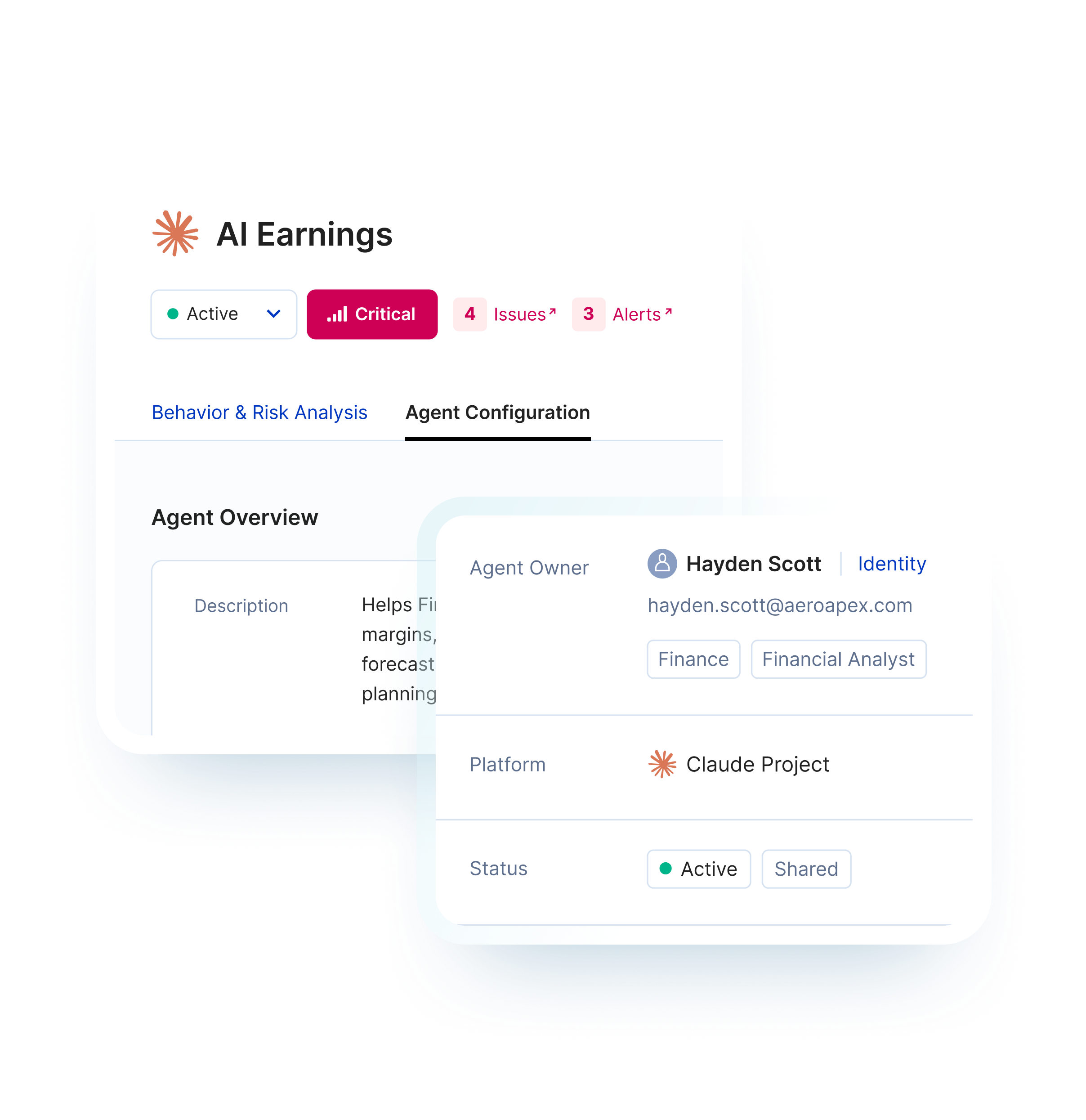
Opsin identifies who built each agent rather than relying on a default owner assignment, so you can route remediation to someone who can act.
Prioritize by Agent Activity
Distinguish agents in use from those with no recent activity, and decide which need attention.
Map Agent Reach
See each agent’s access level, users, data sources, and connected capabilities in one place.
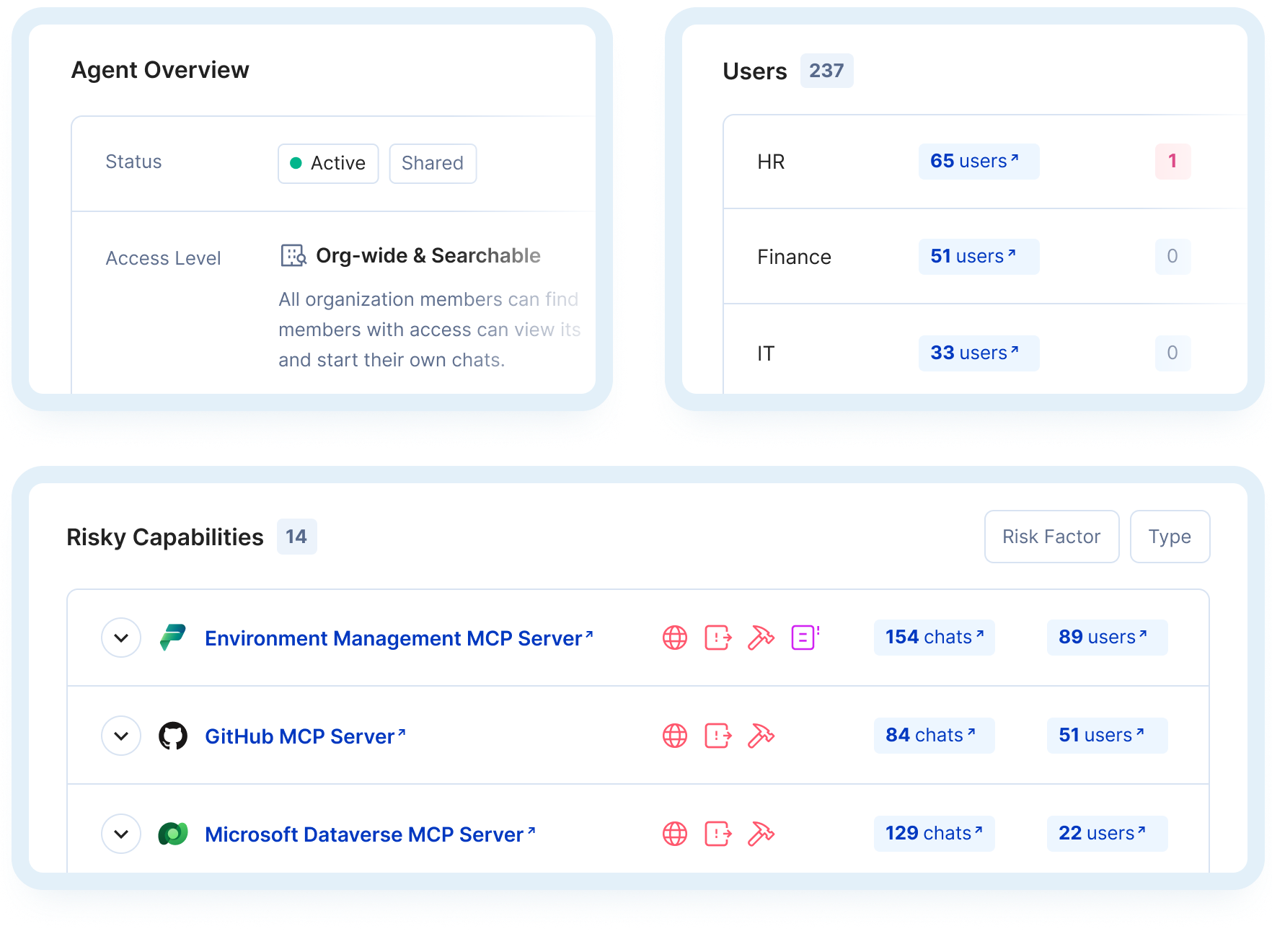
From agent sprawl to risk clarity
Connect at the API Layer
Map Agent Intent to Capabilities
Surface Agents Needing Attention
Track Changes Over Time
Assess agent risk with confidence


Extend protection across the agent lifecycle
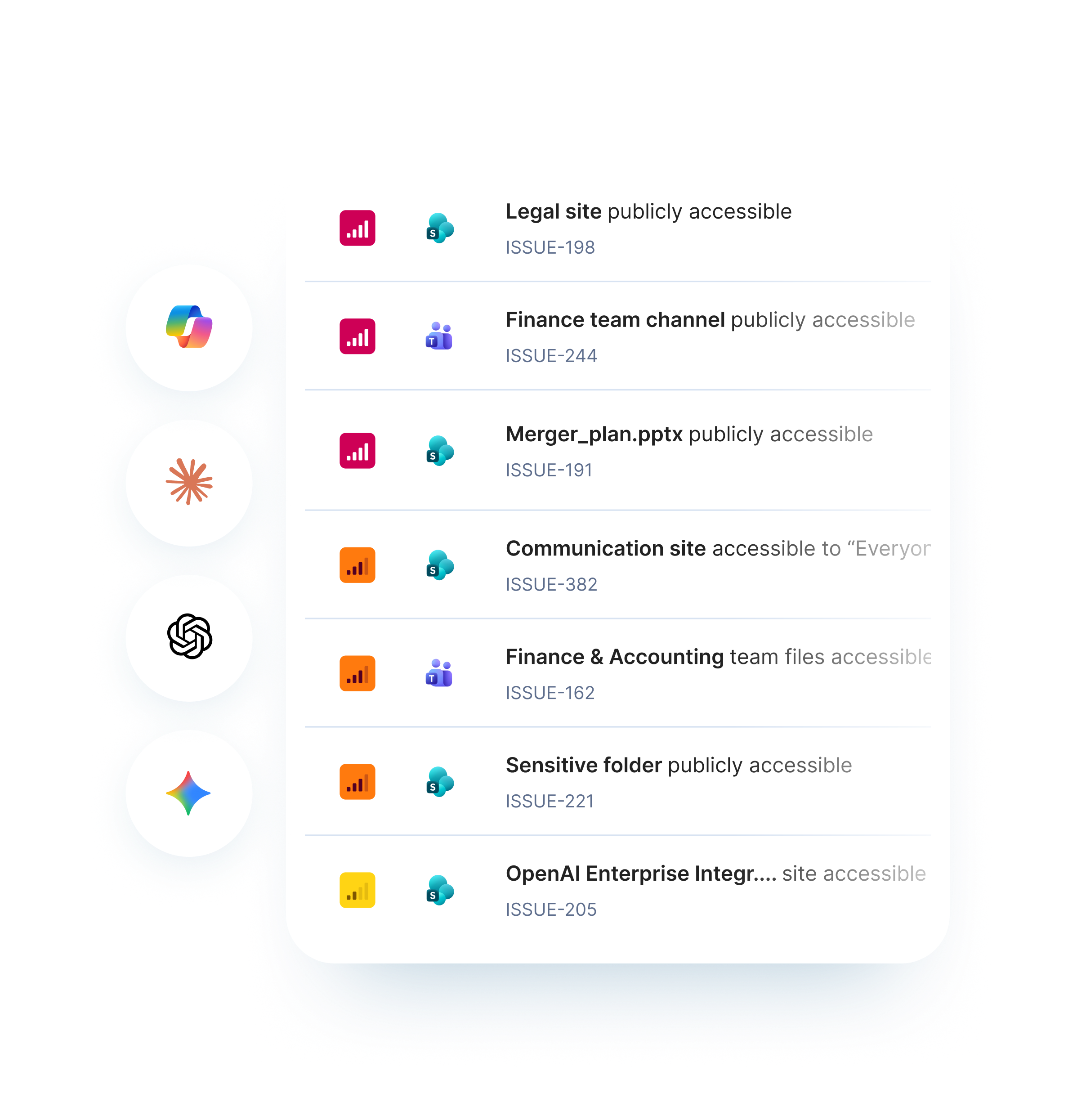
Ongoing Oversharing Protection
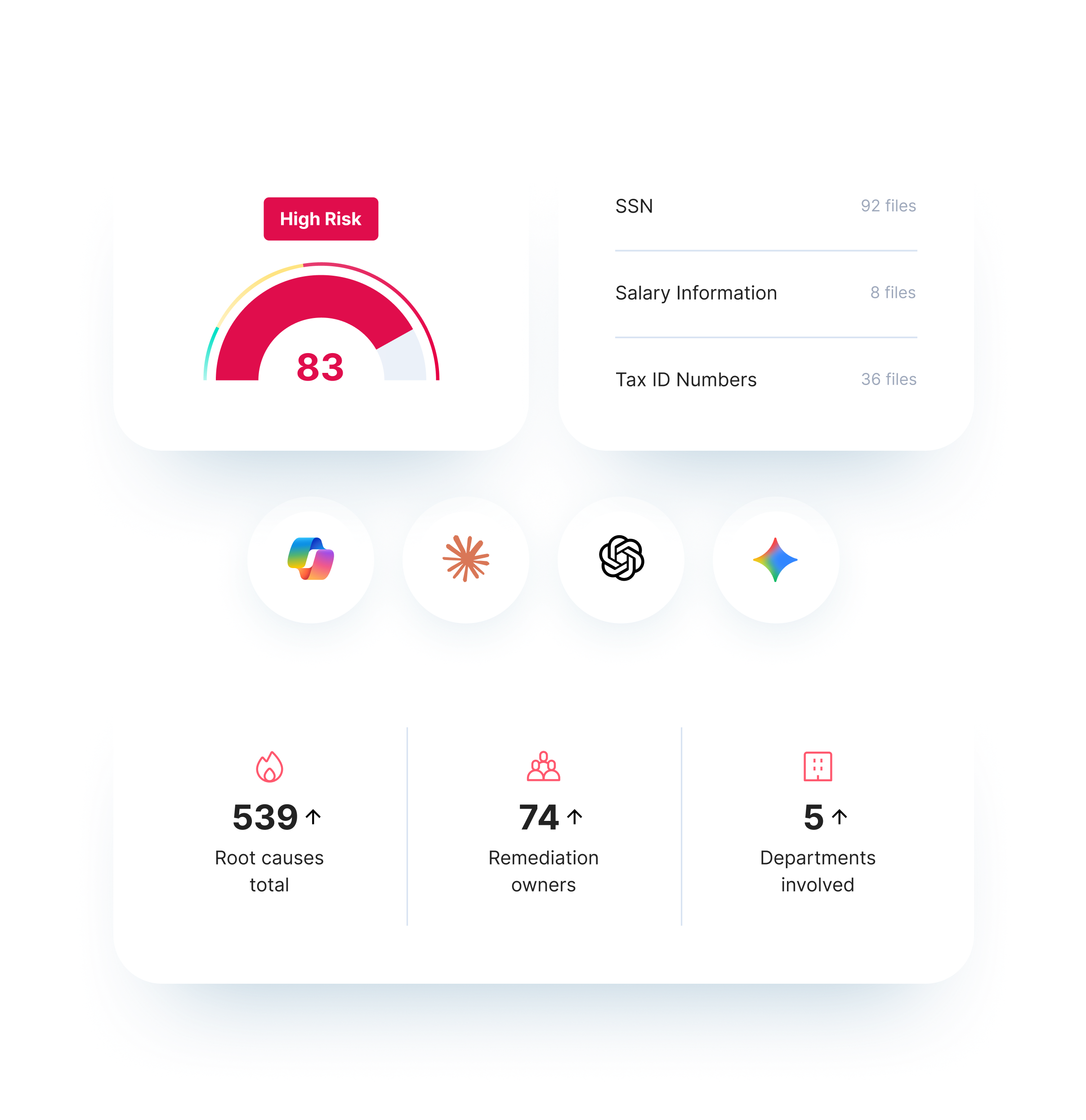
AI Risk Assessment
Agent Identity Security
What is AI agent discovery?

AI agent discovery is the process of building a complete inventory of the AI agents employees have created across enterprise AI platforms. Opsin connects by API and maps each agent to its owner, last activity, permissions, tools, and data reach, then keeps that inventory current as platforms change.
Which platforms does Opsin discover agents on?
Opsin discovers agents across Microsoft Copilot, Claude, ChatGPT Enterprise, Gemini, and other enterprise-approved AI tools. See how this works for Copilot specifically on our Microsoft Copilot security page.
Does agent discovery require installing software on endpoints?
No. Opsin uses agentless, delegated API access. There is no endpoint software, browser extension, or employee survey, and teams see their full agent inventory within 24 hours of connecting.
What is agent sprawl?
Agent sprawl is the buildup of workforce-built agents that nobody tracks, owns, or retires. Opsin research found 1 in 3 agents go unused after creation and remain undeleted, each keeping its access the whole time. We analyzed what this looks like at scale in Claude agent sprawl: what 11,000 projects look like.
How does Opsin decide which agents need attention first?
Opsin prioritizes using three signals together:
- Ownership: does a real person answer for the agent, or is it ownerless
- Activity: is the agent actively used or abandonedd
- Risk: does sensitive data access combine with high-impact capabilities
Agents where all three go wrong rise to the top of the queue.
How is agent discovery different from agent governance?
Discovery builds the inventory: which agents exist, who owns them, and what they can reach. Governance acts on it: approving agents against policy and holding owners accountable. See Agent Governance.
What is an AI agent inventory?
An AI agent inventory is a live list of every agent in your environment: who owns it, which platform it runs on, when it was last used, and what data, tools and permissions it can reach. Opsin builds it from platform APIs and refreshes it on an ongoing cadence, including draft agents that were never published. The inventory is the input for AI Agent Governance.
Why do teams choose Opsin for agent discovery?
Because there is nothing to install and nothing for employees to fill in. Opsin connects by API and covers Copilot, ChatGPT Enterprise, Claude and Gemini from one place.
- Shows the real builder, not a default owner
- Separates active agents from abandoned ones
- Full inventory within 24 hours of connecting
Read how UiPath governs agents across ChatGPT Enterprise.
Turn agent sprawl into risk clarity